Three hours of rocky paths, slippery wadis, and dunes to reach an immense flat rocky area. In the center, Zarga. A hellish place, forgotten by any god you might believe in.
When it rains or a sandstorm blows, there’s nowhere to take shelter; not a tree, not a rock, a crevice, or a damned hole. Nothing. Just crouch down and hope it passes.
And here lives a very poor community of people with a disarming charm. Beautiful children and women with enchanting faces.
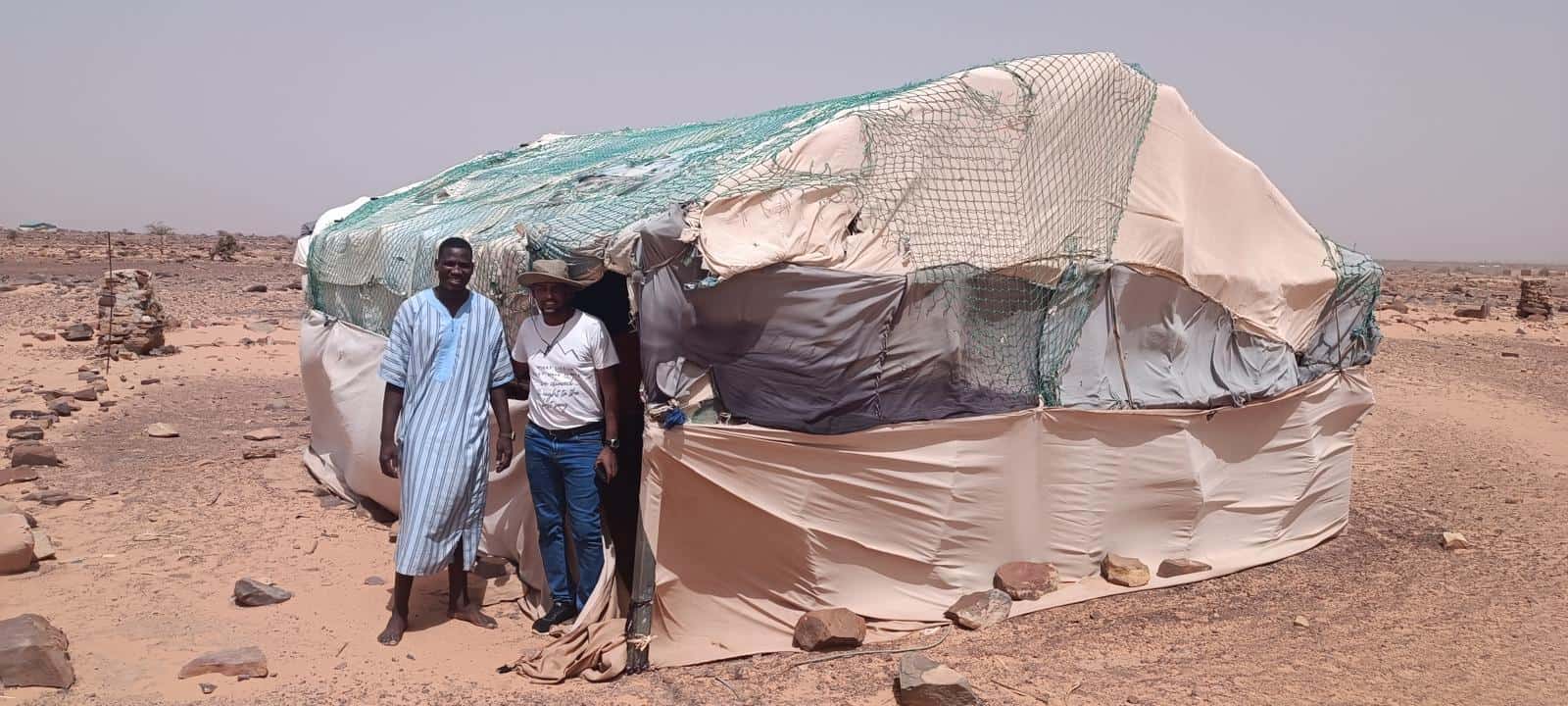
Here, they call school a frame of crisscrossed tubes strung with tufts of colorful cloth, a mat they move to the side where the wind blows for shelter. They call a pile of rags and straw home.
And to top it off, this community has a woman as the village chief: the only village in Adrar. Perhaps the whole of Mauritania.
Building a school here isn’t just building a school; it’s providing safe shelter to dozens of children.
I had already visited this village some time ago, with some friends, on one of my trips to Mauritania. Returning to plan something concrete was important.
I was there in May, and the impression I got was significant. With Children in the Desert, we decided to try in every way to find the funds to build the school there. Today I returned with the ever-reliable and friendly Dahi Khourou.
5 hours of scorching rocky and stony tracks, to the point of rejoicing when we encountered sand. We were welcomed by 45°C in the shade: you can’t last more than 5 minutes in the sun.
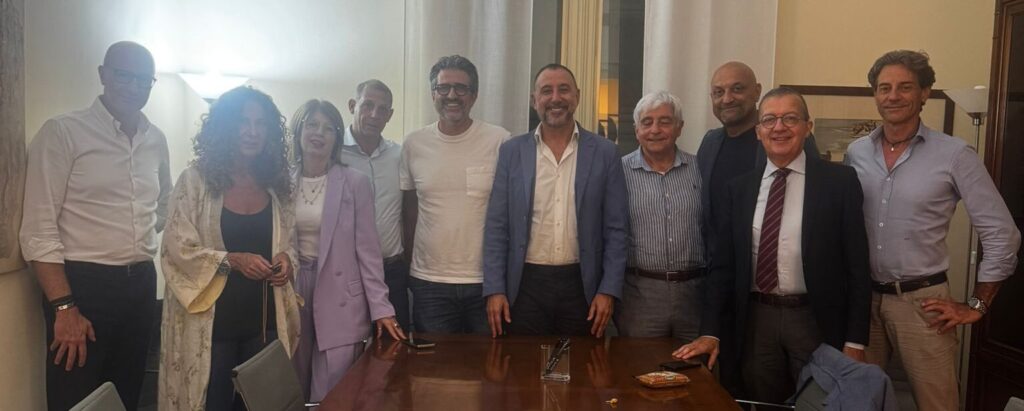
All because we found those funds!! The “Imani For Children” Association from Milan offered to help us and finance the construction of the school.
In 3 days, the school in Zarga will reopen. While waiting for the new one to be built, which will be funded by friends at the Imani For Children Association in Milan, the rag hut I found in May was no longer usable: repaired as best as possible, it has become a family home. The community, with its few resources, has put up a new hut; still made of rags, but a bit newer and a bit bigger. The community centered in Zarga is scattered across the entire plateau and is estimated to number 1,200 – 1,400 people. The children, while waiting for the new school, can at least take shelter here.
News from Mauritania